
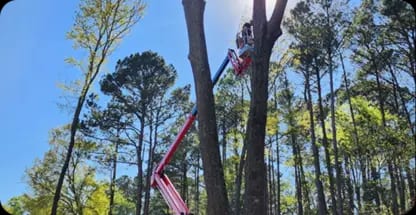
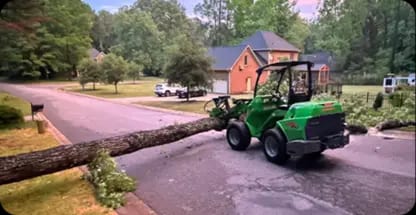
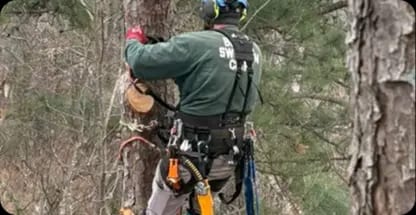
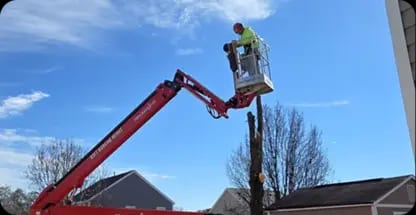
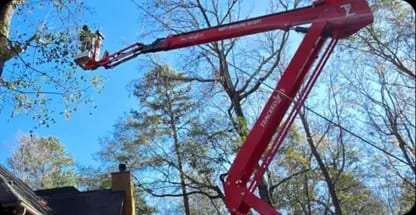
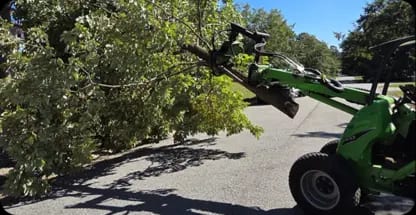
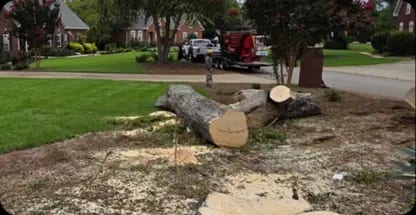
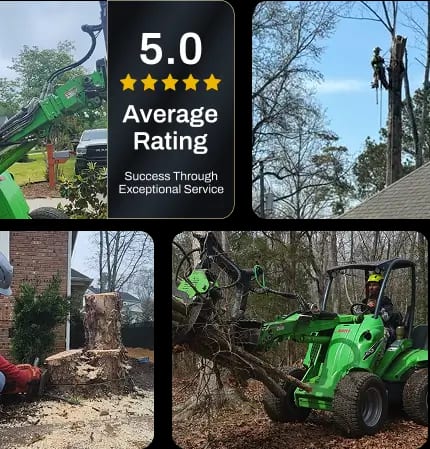
I can't recommend Dixon Trees highly enough. But I was most impressed by their team. From Robbie working above the power lines which the power company failed to drop, to Spencer, the owner, working alongside his crew. If you ever need tree removal, it would be a mistake not to use Dixon Trees!
Lexington, SC's Accredited Tree Service
Real Arborists. Real Equipment. 24/7 Storm Response.
From a single dead pine to full land clearing projects, Dixon Trees LLC provides professional tree service across Lexington and the Midlands. We handle everything from removals and trimming to large-scale clearing, with safe, reliable work done the way it should be.
Current Offers
10% Off Any Service Over
$500 for New Customers
New to Dixon Trees? Your first job over $500 gets 10% off. Applies across all service types - removal, trimming, pruning, cabling, lot or land clearing.
$100 Off Same-Day
Service for New Customers
If we can get to you the same day you call, new customers get $100 off the job. Handy for situations where you need it done now.
No Money Up Front on
Insurance Work
If your project is covered by homeowners insurance - typically storm damage to a covered structure - there's nothing to pay up front. We bill the insurer directly and handle the documentation.
Military, Veteran,
and Senior Discounts
As a veteran-owned business, we take care of military members, veterans, and seniors with additional discounts on every job. Just mention it during your estimate.
Financing and
Payment Plans
For larger projects, we offer financing and payment plans so a major removal or clearing job doesn't have to wait for the budget to clear.
OUR TREE SERVICES
Tree Services Across Lexington and the Midlands
Dixon Trees LLC handles a focused set of tree services for residential, commercial, and rural properties. Everything we do is backed by our workmanship guarantee and no-surprise pricing.
About Us
About Dixon Trees LLC
Family-Owned, Veteran-Owned,
Locally Rooted in Lexington
Dixon Trees LLC is a family-owned, veteran-owned tree service based in Lexington, South Carolina. We’ve been serving the area for six years with a team that brings 50+ years of combined experience.
We’re one of the most trusted tree companies in Lexington, known for consistent work, clear communication, and doing the job the right way without shortcuts.
Our crews are ISA-trained, OSHA-certified, and fully insured. We’re also TCIA-accredited and BBB A+ rated.
We keep things straightforward: honest recommendations, fair pricing, and safe, professional tree work. If a tree doesn’t need to come down, we’ll tell you. Most of our work comes from repeat customers and referrals.
Midlands Communities We Serve
Lexington is home base, but our crews work across the broader Midlands. If you don't see your area listed, give us a call - there's a good chance we cover it.
Cities & Towns
- Lexington
- Leesville
- Gilbert
- Irmo
- Chapin
- West Columbia
- Columbia
- Batesburg
- Cayce
- Little Mountain
- Newberry
- Ballentine
- Prosperity
- Peak
- Columbia
- Blythewood
Counties
- Lexington County
- Richland County
- Newberry County
- Saluda County
Why Choose Dixon Trees
Licensed, Bonded,
and Insured
Dixon Trees is fully licensed, bonded, and insured — general liability, workers' compensation, and commercial vehicle and equipment coverage on every job. We'll provide a current certificate of insurance on request before any work starts, and we recommend asking every tree service you consider for the same.
Workmanship Guarantee
on Every Job
Every project comes with a workmanship guarantee. If something isn't right, we come back and make it right. That's not a slogan - it's how we've operated since day one.
No-Surprise
Pricing - In Writing
The quote we give you at the estimate is the price you pay at the end of the job. No hidden fees, no surprise add-ons, no "scope expanded" surcharges. If we hit something unexpected once work starts, that's our problem to solve, not a reason to raise your bill.
Specialized Equipment
for the Toughest Work
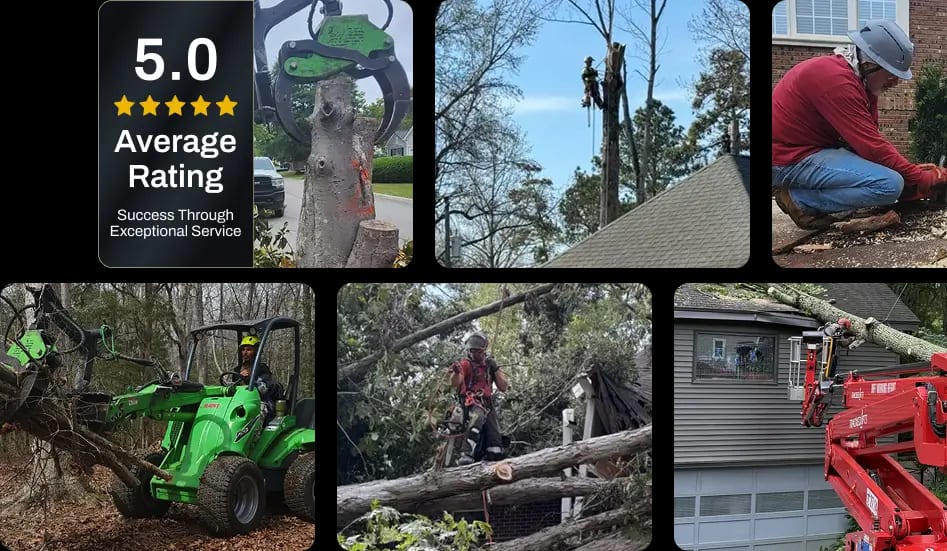
Crane-assisted removal for hazardous trees. Professional rigging systems for tight-space dismantling. Chippers, dump trucks, stump grinders, and the safety equipment that lets our crews work efficiently and safely.
On-Time
Guarantee
When we book a job, we show up when we said we would. If something legitimately changes the schedule, you hear about it ahead of time.
Clear, Transparent,
Prompt Communication
You'll know what's happening at every stage - from the estimate, through scheduling, through the work itself, through the final walkthrough. Timely responses to calls, texts, and emails are standard.
Veteran-Owned and
Family-Operated
Locally rooted in Lexington with a majority-family team and low turnover, which is why the same crews show up year after year for repeat customers.
TESTIMONIALS
What Our Clients Say
I cannot say enough good things about this company. They came out quickly to assess the situation, provided a clear and fair estimate, and scheduled the work without delay. The crew arrived on time, worked safely and carefully around my home, and completed the trimming with precision.
I called Dixon Trees for a tree removal and was blown away by the quick response, fair price, and friendly crew. They cleared the tree efficiently and followed up to make sure everything was fine. Highly recommend, will definitely use them again.
I was very impressed with Dixon Trees. The crew was professional, friendly and efficient, arriving right on schedule and explaining everything clearly. Their reliability and attention to detail really stood out – I would highly recommend them for any tree care needs.
I called Dixon Trees for tree removal and they arrived right on time, were professional and left the yard clean. The quick response and fair pricing were the best part. Would definitely use them again.
Dixon Trees was affordable. I used them for a tree removal in my backyard. The workers were nice, timely and quick. The tree was down in less than an hour, literally. I'll definitely use them again.
You Can Trust The Experts
At Dixon Trees

Flexible Payments & Discounts on Any Tree Service
Free Estimates
Every project starts with a free, no-obligation quote. In-person walkthroughs are standard, but we also offer virtual and phone estimates for straightforward jobs.
Financing & Payment Plans
Larger removals, full lot clearing, or land clearing projects can run into real money. We offer financing and payment plans so the work can happen on a schedule that fits your budget.
Insurance Billing
For storm damage and other insurance-covered work, we work directly with insurance companies on the customer's behalf. Direct billing where applicable, no money up front, and full documentation for adjusters.
Discounts
10% off any service over $500 for new customers. $100 off same-day hire for new customers. Additional discounts for military members, veterans, and seniors. References available on request from past Midlands customers.
Lexington & Midlands Tree Regulations and Local Resources
Tree removal, trimming, and clearing in the Midlands can sometimes intersect with local ordinances – especially on commercial parcels, within municipal limits, near rights-of-way, or close to wetlands and protected buffers. If your project might involve any of those, the resources below can help. We’ll also flag anything that applies to your specific job during the estimate.
Lexington & Local Municipal Resources
- Town of Lexington Planning Department: Permits, zoning, and tree-related ordinances for properties inside the Town of Lexington.
- Lexington County Planning & GIS: Land use and zoning resources for unincorporated areas of Lexington County.
- City of Columbia Planning & Development Services: Tree preservation and landscape requirements for properties inside the City of Columbia.
State & Regional Resources
- South Carolina Forestry Commission: State urban forestry programs, tree pest and disease alerts, and forest health information for South Carolina.
- South Carolina Department of Natural Resources: Environmental regulations, invasive species tracking, and wetland protection resources.
- National Weather Service – Columbia Office: Severe weather alerts, wind advisories, and storm forecasts for the Midlands service area.
- International Society of Arboriculture: National arborist standards, tree care education, and certification verification.
Insurance Coverage You Can Verify
Tree work is dangerous, and uninsured operators create real liability problems for the homeowners who hire them. Dixon Trees carries the full slate of coverage – general liability, workers’ compensation, commercial vehicle and equipment coverage – and we’ll provide a certificate of insurance on request before any job starts.
General Liability
Protects your property in the unlikely event of accidental damage during the work.
Commercial Vehicle & Equipment Coverage
All our trucks, cranes, chippers, and equipment carry proper commercial coverage.
Workers’ Compensation
Covers our crew members for any on-site injury, which protects you from being liable for a worker hurt on your property. This is the one most uninsured operators skip – and it’s the one that can leave a homeowner exposed to a six-figure claim.
Insurance Claim Support
After storm damage or a hazardous tree event covered by your homeowners policy, we document the damage, provide written assessments and itemized estimates suitable for adjusters, and bill the insurer directly where applicable. No money up front on covered work.
How We Protect Your Property During the Work
Tree work involves heavy materials, sharp equipment, and tons of wood moving through your yard. Protecting your property during the job isn’t optional – it’s how we plan every project from the first walk-through.
Before any saw runs, we identify what needs protecting: irrigation lines, garden beds, fences, the dog’s run, the patio, the swimming pool. We lay down protective mats over soft ground where heavy gear has to roll. We rig limbs so they come down where we want them, not where gravity decides to drop them. And we keep the work zone organized as we go, instead of leaving it for one big push at the end.
When the cutting stops, the job isn’t over. We chip, haul, rake, and blow – leaving the area cleaner than we found it. The goal isn’t just to get the tree down; it’s for you to walk outside afterward and notice the tree is gone but nothing else looks different.
Trees That Thrive in the Midlands
The Lexington area sits in the South Carolina Sandhills/Midlands transition zone – a climate that supports a broad mix of native hardwoods, pines, and ornamentals. If you’re planning to replant after a removal, or just curious what’s growing in your yard, these are some of the species we work with most often and recommend most readily for Midlands properties:
- Live Oak (Quercus virginiana) – iconic Southern shade tree, very long-lived, exceptional wind resistance
- White Oak (Quercus alba) – slow-growing, long-lived, excellent native hardwood
- Willow Oak (Quercus phellos) – fast-growing, popular shade and street tree in the Midlands
- Water Oak (Quercus nigra) – common throughout the Midlands, shorter-lived than white or live oaks
- Loblolly Pine (Pinus taeda) – dominant Southern pine, fast-growing
- Longleaf Pine (Pinus palustris) – slower, stronger, more wind-resistant than loblolly
- Bald Cypress (Taxodium distichum) – native, handles wet soils, beautiful fall color
- Southern Magnolia (Magnolia grandiflora) – classic Southern landscape tree
- River Birch (Betula nigra) – well-suited to Midlands clay and wet sites
- Eastern Redbud (Cercis canadensis) – early spring color, well-sized for small yards
- Flowering Dogwood (Cornus florida) – small understory tree with spring blooms
- Crepe Myrtle (Lagerstroemia indica) – extremely popular Southern ornamental, long bloom season
- American Holly (Ilex opaca) – evergreen native, good for screening and wildlife
If you’re not sure what’s growing on your property – or what would do well there – bring it up during your free estimate. We’ll walk through it with you.
Lexington, SC Climate and Tree Risks
Understanding the local climate helps explain why tree maintenance matters in the Midlands. We get long hot summers, heavy thunderstorms, the occasional remnants of tropical systems, and just enough winter cold to stress trees that don’t belong here – all of which puts repeated demands on the trees in your yard.
Lexington/Columbia, SC – 30-year climate normals (NOAA, 1991–2020):
| Month | Avg High (°F) | Avg Low (°F) | Avg Mean (°F) | Avg Precipitation (in) | Avg Snowfall (in) |
|---|---|---|---|---|---|
| Jan | 57 | 34 | 45.5 | 3.85 | 0.7 |
| Feb | 61 | 36 | 48.5 | 3.32 | 0.4 |
| Mar | 69 | 43 | 56.0 | 3.85 | 0.1 |
| Apr | 77 | 50 | 63.5 | 3.05 | 0 |
| May | 84 | 59 | 71.5 | 3.51 | 0 |
| Jun | 90 | 68 | 79.0 | 4.78 | 0 |
| Jul | 93 | 72 | 82.5 | 4.78 | 0 |
| Aug | 91 | 71 | 81.0 | 5.31 | 0 |
| Sep | 85 | 64 | 74.5 | 3.83 | 0 |
| Oct | 76 | 52 | 64.0 | 3.30 | 0 |
| Nov | 68 | 42 | 55.0 | 2.83 | 0 |
| Dec | 59 | 36 | 47.5 | 3.94 | 0.2 |
| Annual | 76 | 52 | 64.0 | 46.35 | 1.4 |
Key Tree Risk Factors in the Midlands
| Climate Factor | Impact on Trees |
|---|---|
| Severe Summer Thunderstorms | Microbursts and 60+ mph gusts find weak branch unions and snap mature trees, especially in July and August. |
| Tropical Storm Remnants | Atlantic tropical systems push inland through the Midlands every few years, bringing saturated soil and sustained winds that uproot trees. |
| Hot, Humid Summers (90°F+ for weeks) | Long heat stretches stress trees, open the door to bark beetles, ambrosia beetles, and fungal infections. |
| Drought and Dry Spells | Periods without rain in late summer push mature trees into stress, causing premature leaf drop and tip dieback. |
| Heavy Clay Soils | Piedmont clay holds water and limits root depth, leaving many trees more prone to uprooting in saturated conditions. |
| Occasional Winter Ice Events | Rare but damaging – even minor ice loading on Midlands trees, which aren’t built for it, can shear off major limbs. |
| Frequent Lightning Activity | South Carolina ranks among the most lightning-prone states. Direct strikes often damage trees internally even when they look fine externally. |
Most of the catastrophic tree failures we respond to could have been prevented with timely inspection, trimming, or removal. A free arborist evaluation is one of the cheapest things you can do to protect your property.
Frequently Asked Questions
Please reach us at (803) 598-3888 if you cannot find an answer to your question.
It depends on size, access, and complications. A small ornamental might run $250 to $600. A mature oak near a house can run $1,500 to $3,000 or more. Hazardous removals and crane-assisted work cost more. Free estimates give you a firm written number before any work starts.
Yes. Real 24/7 emergency tree service across Lexington and the surrounding Midlands. A live person answers the phone, day or night.
Common signs: large dead branches, deep cracks in the trunk, mushrooms or fungal growth at the base, a sudden lean, exposed roots, or major storm damage. We'll evaluate it during a free on-site inspection and tell you honestly - sometimes pruning or cabling is enough; sometimes removal is the right call.
Yes - fully licensed, bonded, and insured. Certificate of insurance available on request before any job starts. We recommend asking every tree service you consider for the same.
No - stump grinding is included as part of our tree removal service, not booked separately. If you have an existing stump from someone else's work, mention it during your estimate and we'll discuss options.
Yes. Hazardous removals and tight-space work are some of our most-requested services. We use crane-assisted techniques and full rigging systems for trees that other companies turn down.
For routine work, usually within a few days. For genuine emergencies - trees on houses, blocked access, hanging widow-makers - same-day response when conditions allow.