Water oaks (Quercus nigra) grow quickly and provide generous shade, but they are relatively short-lived compared with many other oak species. Their wood is prone to breakage, and they do not always contain internal decay effectively. In residential yards across Lexington, South Carolina, root damage, pruning wounds, and severe weather can accelerate their decline.
Many homeowners buy a house with a large water oak and assume it will provide shade for generations. After all, oaks have a reputation for strength and longevity. However, water oaks often begin showing structural problems as they mature. Understanding their natural limitations helps you recognize warning signs, plan for future tree care, and protect your property.
What Makes Water Oaks Different
Water oaks are fast-growing trees native to the southeastern United States. They are common in Lexington, Columbia, and throughout the South Carolina Midlands. Homeowners and builders have planted them widely because they establish quickly and provide shade without requiring decades of growth.
However, rapid growth can come with structural disadvantages.
- Relatively weak wood: Water oak branches can become heavy and vulnerable to breakage as the tree matures, particularly during strong winds and storms.
- Shorter lifespan: Water oaks generally do not live as long as species such as live oak and white oak. Their useful lifespan depends on growing conditions, tree health, and previous damage.
- Distinctive leaves: Their leaves vary in shape but often have narrow bases and wider, rounded or three-lobed tips.
- Changing bark: Young water oaks have relatively smooth, dark bark that becomes rougher as the tree ages.
These characteristics do not mean every mature water oak is dangerous. They do mean homeowners should pay attention to its condition instead of assuming that a large, leafy tree is structurally sound.
The Natural Lifespan Is Shorter Than Most Oaks
Water oaks are considered relatively short-lived trees. UF/IFAS describes their lifespan as approximately 30 to 50 years in many growing conditions, although individual trees may live longer or decline sooner.
Live oaks and white oaks can survive for many decades or even centuries under favorable conditions. Water oaks generally have a shorter window before structural defects and internal decay become concerns.
This difference matters in established Lexington neighborhoods. Some properties have mature water oaks that have grown for decades, and their owners may not know the trees are entering a stage when decay, dead branches, and weak attachments become more likely.
Age alone does not determine whether a tree needs removal. A professional assessment should consider the trunk, root system, branch structure, visible decay, and the consequences if the tree or a major limb fails.
How Lexington Yards Speed Up the Decline
A tree growing in an undisturbed forest faces different conditions from one planted in a residential yard. Construction, landscaping, and routine lawn maintenance can expose water oaks to repeated stress.
- Soil compaction: Construction equipment, driveways, and years of foot traffic can compress soil around roots. Compacted soil restricts the movement of air and water, making it harder for roots to function normally.
- Root damage: Trenching for utilities, irrigation systems, pools, patios, and other projects can sever roots. Significant root loss can affect stability and reduce the tree’s ability to absorb water and nutrients.
- Lawn-care injuries: Mowers and string trimmers can damage bark near the base of the trunk. These wounds create opportunities for decay organisms to enter.
- Poor mulch placement: Piling mulch against the trunk traps moisture near the bark and can contribute to trunk problems.
- Watering and drainage issues: Prolonged drought can stress trees, while poorly drained soil and excessive irrigation can contribute to root problems.
The effects may build gradually over many years. A water oak can continue producing leaves even when its roots or trunk have sustained significant damage.
For practical advice on protecting trees through hot, dry weather, read our blog – ‘A Practical Tree Maintenance Guide for Lexington’s Brutal Summers’. It covers watering, mulch placement, and other steps homeowners can take to reduce avoidable stress.
Pruning Wounds and Decay
Water oaks can be vulnerable to internal decay, especially when injuries expose wood to decay organisms. Broken branches, storm damage, and poor pruning cuts can all create entry points.
The process can be difficult to detect because decay often develops inside the trunk or major branches. A tree may retain green foliage while its internal structure deteriorates.
Watch for these potential problems:
- Large pruning wounds or broken branch stubs.
- Cavities or areas of missing bark on the trunk.
- Mushrooms or shelf-like fungal growth near the trunk or root collar.
- Dead branches and progressive dieback in the crown.
- Cracks or splits around major branch unions.
These signs do not always mean a tree must come down, but they warrant closer assessment. The significance of a cavity or fungal growth depends on its location, the extent of decay, and the tree’s overall structure.
Proper pruning can remove dead or hazardous branches and help manage the tree’s structure. However, pruning cannot reverse extensive internal decay. Pruning at the right time also matters for oak health. Read our blog titled – ‘The best time to trim live oaks in Lexington’ where we have explained seasonal considerations and storm-prevention benefits. Although water oaks have different characteristics, homeowners should also consider the timing and purpose of pruning before scheduling work.
Storms, Heat, and Heavy Limbs
South Carolina summers bring thunderstorms, strong gusts, and periods of intense heat. Tropical systems can also affect the Midlands. These conditions place additional stress on mature trees, particularly those with existing structural defects.
Water oak limbs can become heavy as they grow. Several factors can increase the risk of breakage:
- Weak branch unions: Two stems growing closely together may form a weak attachment, especially when bark becomes trapped between them.
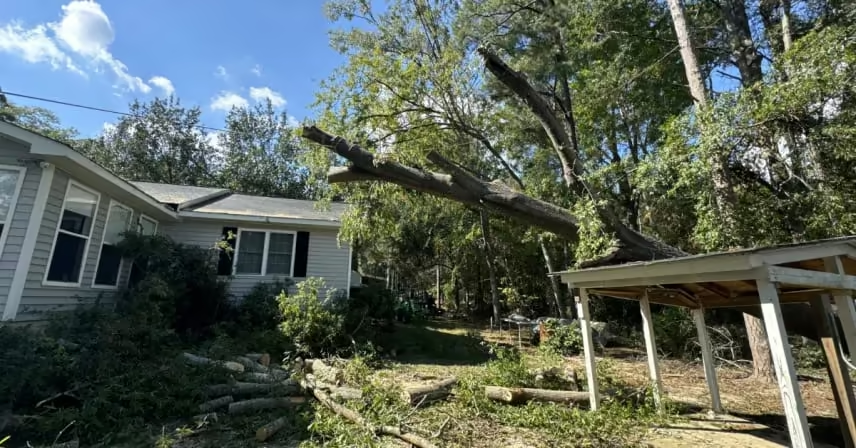
- Long, heavy branches: Large limbs extending over roofs, driveways, and outdoor living areas can cause significant damage if they break.
- Existing decay: Internal deterioration can weaken branches or the trunk without obvious external symptoms.
- Root instability: Root damage or saturated soil can affect a tree’s stability during strong winds.
Drought and heavy rain can also create different types of stress. Dry conditions can affect tree health, while saturated soil may contribute to instability in trees with compromised root systems. Do not assume a tree is safe simply because it survived previous storms. Existing defects can worsen over time, and another storm may expose weaknesses that were not obvious before.
If a storm leaves a large branch cracked, hanging, or resting against your home, do not attempt to remove it yourself.
5 Warning Signs Your Water Oak Is Declining
Regularly inspect your water oak from a safe position on the ground. Look for changes in its canopy, trunk, branches, and surrounding soil.
- Crown dieback: Dead branches at the top of the tree, thinning foliage, or smaller leaves can indicate declining health.
- Trunk cavities and fungal growth: Hollow areas, large wounds, or mushrooms near the trunk and roots may indicate decay.
- Cracks and splits: Check for visible cracks along the trunk or at major branch attachments.
- Root movement: Newly lifted soil, cracks around the root zone, or a sudden lean may indicate a stability problem.
- Unexpected limb failure: Large branches falling without an obvious external cause can point to decay or structural weakness.
The International Society of Arboriculture’s guide to managing tree hazards and risk explains how defects, root damage, and decay can affect tree safety.
If you notice warning signs, arrange an inspection with an experienced tree professional in Lexington, South Carolina. Keep people away from the area beneath a visibly cracked or unstable tree until it has been assessed. If a tree is leaning suddenly or has major structural damage, treat the situation as urgent.
Options for Aging Water Oaks
The right approach depends on the tree’s condition, location, and potential targets if a branch or trunk fails. An arborist can assess whether maintenance may reduce risk or whether removal is the safer option.
- Pruning
Pruning can remove dead branches, address selected structural defects, and reduce excess weight where appropriate. It is most useful when the tree retains adequate structural integrity.
Removing too much live foliage or making unnecessary large cuts can add stress and create further wounds. Work should be planned around the species, season, and condition of the tree.
- Cabling and Bracing
Cabling and bracing may help support selected weak branch unions or stems. These systems are not suitable for every tree and do not eliminate the risk of failure. They also require appropriate installation and periodic inspection.
Learn more about Dixon Trees’ tree cabling and bracing services to understand when structural support may be worth considering.
- Tree Removal
Tree removal may be necessary when a water oak has extensive decay, a compromised root system, major trunk cracks, or structural defects that cannot be managed adequately. Location matters, too. A declining tree over a house or frequently used driveway presents different consequences from one in an open area.
Professional tree removal can involve rigging, sectional dismantling, and specialized equipment to lower branches and trunk sections in a controlled manner.
Do not wait for a severe storm to make a decision about an obviously hazardous tree. If you are concerned about possible damage to a home or other insured structure, review the relevant provisions of your homeowners insurance policy with your insurer.
Planning Ahead With Better Trees
When a water oak reaches the end of its useful life, replacement gives you an opportunity to choose a species that better suits your property and long-term plans.
Possible alternatives include live oak and white oak. Nuttall oak may also be worth considering where local conditions are suitable. No species is ideal for every site, so consider mature size, soil drainage, available root space, sunlight, and proximity to buildings.
Follow these basic planting principles:
- Choose a tree suited to the site’s soil and drainage conditions.
- Leave enough room for the mature canopy and root system.
- Plant at the correct depth, with the root flare visible at the soil surface.
- Water newly planted trees appropriately as their roots establish.
- Apply mulch over the root zone, keeping it away from the trunk.
The Arbor Day Foundation’s guide to choosing the right tree can help you explore tree-selection considerations. A well-matched replacement tree can provide shade and landscape value for years to come.
Protect Your Property With Expert Water Oak Tree Care From Dixon Trees
Dixon Trees LLC helps homeowners in Lexington, South Carolina, identify declining water oaks and address potential tree hazards. Our team can assess visible concerns such as dead branches, trunk cavities, weak branch unions, and root instability.
Based on the tree’s condition and location, the appropriate recommendation may include pruning, cabling and bracing, further assessment, or removal. When a water oak becomes structurally unsafe, professional removal can help protect nearby homes, driveways, fences, and landscaping.
Routine inspections can also help homeowners identify problems before severe weather makes them more urgent. Not every aging water oak needs to be removed, so a professional evaluation is an important step in choosing the right approach.
If your water oak is showing signs of decline, contact Dixon Trees at (803) 598-3888 to discuss suitable tree care and removal options for your property.
Frequently Asked Questions
How long do water oaks usually live?
Water oaks are relatively short-lived compared with many other oak species. UF/IFAS describes a typical lifespan of around 30 to 50 years in many settings, although growing conditions and tree health can affect how long an individual tree survives.
Why do water oak limbs fall so often?
Water oak wood is relatively weak, and mature branches can become heavy. Internal decay, weak branch unions, storm damage, and other structural defects can increase the risk of breakage.
Can I save a declining water oak?
Sometimes. Pruning and, in selected cases, cabling or bracing may help manage certain defects when the tree remains structurally sound. Extensive trunk decay, severe root damage, or major structural failure may make removal the safer option. An arborist can assess the tree and discuss suitable choices.
Is a hollow water oak dangerous?
A hollow trunk can indicate internal decay, but the level of risk depends on the extent and location of the decay, the remaining sound wood, the tree’s structure, and what lies within falling distance. Have a qualified tree professional assess the tree, especially if it stands near a home, driveway, or frequently used outdoor area.
What should I plant instead of a water oak?
Live oak and white oak may be suitable alternatives for some Lexington properties. Nuttall oak is another possibility where site conditions are appropriate. Choose a species based on available space, soil, drainage, and the tree’s expected mature size.
Does Dixon Trees provide tree services in Lexington, SC?
Dixon Trees LLC provides tree services in Lexington, SC, and surrounding Midlands communities. Depending on the situation, services may include tree risk assessments, pruning, hazardous tree removal, cabling and bracing, and emergency storm response. Contact the team to discuss your property’s needs.