Thunderstorms in the Midlands hit hard. A storm rolls in across Lexington or Columbia, drops two inches of rain in an hour, throws 60 mph gusts at trees that haven’t seen wind like that since the last microburst, and moves on. Then you’re standing in the yard at 9 PM looking at the damage and trying to figure out what’s actually an emergency and what can wait until morning.
Calling for emergency tree service when you don’t need it costs money. Waiting too long when you should have called can cost a lot more – your roof, your car, sometimes your safety. Here’s how to tell the difference.
Call Right Away
These situations are genuine emergencies. Don’t wait.
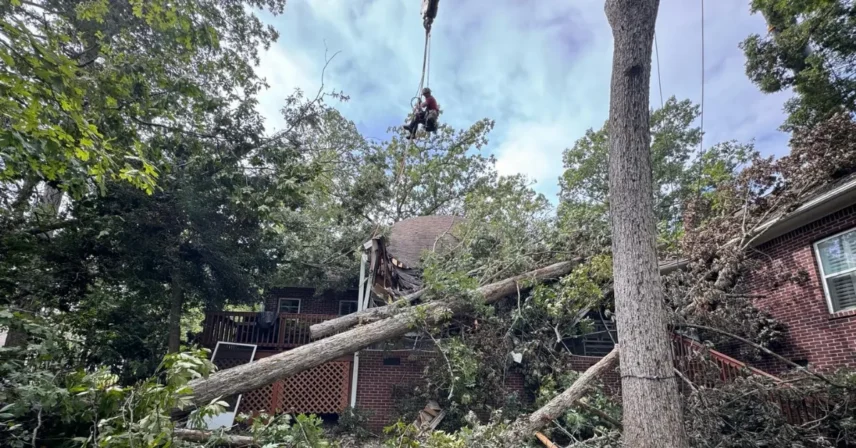
- A tree or large limb is on your house, garage, shed, or any other structure. Even if it looks stable, the longer it sits there, the more water gets in and the worse the damage gets. A tarp isn’t a fix.
- A tree is on a vehicle. Same reason – the longer it sits, the worse the damage to the vehicle, and the longer your insurance claim drags out.
- A tree or major limb is blocking your driveway or the only access to your property. If emergency services can’t reach the house, that’s an emergency in itself.
- A tree is in contact with power lines. Don’t approach it. Call the power company first (Dominion Energy, Mid-Carolina Electric, or whichever serves your area) so they can de-energize the line. Once it’s confirmed dead, a tree service can handle the tree.
- A tree is leaning that wasn’t leaning yesterday. This is one most people underestimate. A tree that’s started leaning after a storm has had its root system compromised, and it can come down at any time – sometimes hours later, sometimes during the next rain, sometimes on a clear afternoon.
- A large limb is hanging in the canopy, partially detached, and waiting to fall. “Widow-makers,” as they’re called for a reason. These come down without warning and they come down hard.
- Visible cracks have opened in a major trunk or branch union after the storm. The tree is in the process of failing, and the next gust may finish the job.
In any of these situations, calling within an hour or two is the right move. A real 24/7 emergency tree service will answer the phone and either dispatch a crew or schedule you for first thing in the morning, depending on conditions and the level of risk.
Call Soon, But It Doesn’t Have to Be Tonight
Some damage looks worse than it is and can wait until normal hours the next day.
- Trees down in the yard that didn’t hit anything. If it’s not on a structure, not blocking access, and not near a power line, the cleanup can wait until daylight.
- Medium and small limbs scattered across the yard. Pick up what you can, leave the rest for the cleanup crew. Not an emergency.
- Damage to fences, sheds without value, or landscaping. Frustrating, but not urgent.
- A tree with some broken branches in the canopy but no signs of leaning, splitting, or hanging widow-makers. Worth getting evaluated, but it can wait a day or two.
For these situations, call the next morning. You’ll get on the schedule faster than you would calling at 11 PM during peak storm response, and you’ll usually pay less than the emergency rate.
What to Do While You’re Waiting for the Crew
If you’ve made the call and a crew is on the way, there are a few things worth doing – and a few things worth not doing.
Do:
- Take photos and video of the damage from multiple angles. Insurance adjusters need documentation, and the more you have, the smoother the claim runs.
- If there’s roof damage and rain is still coming, tarping the inside (attic) is sometimes safer than trying to tarp the outside. Catch water in buckets where possible.
- Call your homeowners insurance to start a claim if a structure was damaged. Most major insurers have a 24-hour claim line.
- Keep kids and pets indoors or well away from the damage area.
- Move vehicles if you can do so safely without driving over downed wires or under hanging limbs.
Don’t:
- Don’t try to cut a tree off your house yourself. Storm-damaged trees are full of trapped tension that releases violently when the wrong cut is made. This is one of the most common ways homeowners end up in the ER.
- Don’t approach any tree or limb touching a power line, no matter how dead the line looks.
- Don’t sign anything from a door-knocker showing up offering immediate cleanup. After every major Midlands storm, traveling crews show up with cheap pricing and no insurance. They’re often gone before anything goes wrong.
- Don’t pay large cash deposits up front. Legitimate tree services don’t ask for them.
- Don’t dispose of damaged sections of the property if an insurance claim is being filed – your adjuster needs to document what happened.
What an Emergency Crew Actually Does First
When the crew arrives, the first job isn’t cleanup – it’s making the situation safe. That usually means dealing with the immediate hazards in this order: any tree or limb threatening to fall on a person or structure, anything blocking critical access, any standing damaged tree that’s likely to fail in the next weather event, then the actual cleanup of what’s already down.
For damage involving a homeowners insurance claim, the crew can usually provide a written assessment and itemized estimate on the spot, plus photo documentation that adjusters can work with. Dixon Trees works directly with insurance companies on the customer’s behalf where applicable, including direct billing and no money up front on covered work.
How Soon Can a Crew Actually Get There?
Response times after a major Midlands storm depend on a few things. How many calls are already in the queue. How widespread the damage is. What the conditions on the road look like. How far the property is from the nearest available crew.
For genuine emergencies – trees on houses, blocked access, immediate safety issues – most legitimate 24/7 services try to be on-site within a few hours. For non-life-threatening situations during peak storm response, it might be the next day. Either way, calling earlier puts you in a better spot in the queue.
Get the Call Right
The short version: if a tree has hit a structure, hit a vehicle, blocked access, touched a power line, started leaning, or left a major limb hanging, call. If it’s just down in the yard with nothing under it, the cleanup can wait until morning.
Dixon Trees LLC runs 24/7 emergency response across Lexington and the surrounding Midlands.