Heavy rain, strong winds, and sudden thunderstorms are common in Columbia, SC. While many trees handle these weather changes well, some become dangerous without much warning. A cracked limb hanging over your driveway, a tree leaning toward your home, or roots lifting from the ground are all signs that you may need emergency tree service right away.
Knowing when a tree problem is an emergency can help protect your family, home, and vehicles. Acting too late can lead to expensive property damage or serious injuries. On the other hand, calling for emergency service when the situation is not urgent may cost you unnecessary time and stress.
Key Takeaways
- Call emergency tree service if a tree falls, suddenly leans, or threatens people, homes, or vehicles.
- Stay away from trees touching power lines and notify the utility company immediately.
- Watch for warning signs like trunk cracks, exposed roots, hanging limbs, and lifting soil.
- Columbia’s storms and heavy rainfall can increase the risk of tree failure.
- Avoid DIY removal of hazardous trees and let trained professionals handle dangerous situations.
- Regular inspections and preventive maintenance can help prevent costly emergencies.
This guide explains how to recognize a true tree emergency, what steps to take before professionals arrive, and how Columbia’s weather and growing conditions can affect tree safety. Whether you’re dealing with storm damage or noticing warning signs after heavy rain, you’ll learn what to do next and how to keep your property safe.
What Counts as an Emergency Tree Service?
Not every damaged tree requires immediate removal, but some situations demand urgent attention because they pose an immediate risk to people or property.
Call for emergency tree service if you notice:
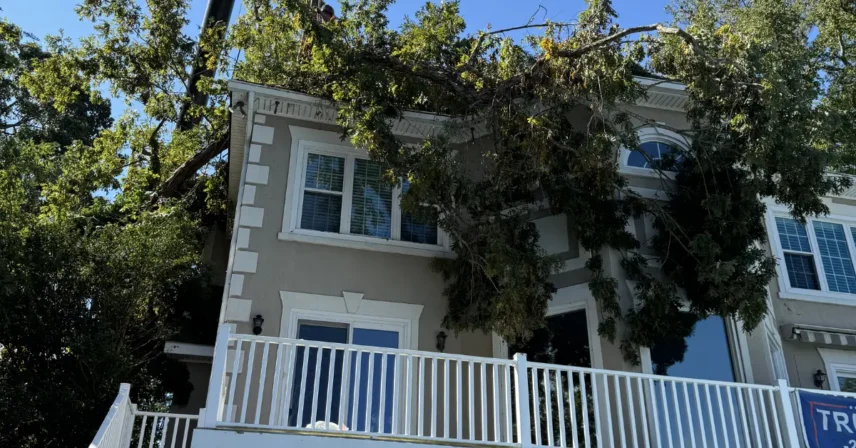
- A tree has fallen onto your home, garage, or other structure.
- Large branches are hanging over your roof or driveway after a storm.
- A tree is leaning significantly more than before.
- Cracks have appeared in the trunk after strong winds.
- The root plate is lifting out of the ground.
- A tree is blocking your driveway or a public road.
- Broken limbs are touching or hanging near power lines.
- A tree has fallen after heavy rainfall and is resting on another tree.
Important Note: Never attempt to remove a tree that is touching a power line. Stay away from the area and contact your utility provider immediately. According to the National Weather Service, downed power lines should always be treated as energized and extremely dangerous. Review the National Weather Service guidance on downed power lines for additional safety precautions.
Warning Signs You Should Never Ignore
Many tree emergencies do not happen without warning. Trees often show signs of stress before they fail.
Watch for these warning signs around your property. For professional guidance on identifying potential hazards, consult the International Society of Arboriculture (ISA) tree risk assessment resources.
A Tree Suddenly Starts Leaning
If a tree that once stood straight begins leaning noticeably after a storm, its roots may have been damaged or loosened by saturated soil.
Large Cracks in the Trunk
Deep vertical or horizontal cracks can indicate structural weakness. These cracks may worsen during the next storm.
Soil Lifting Around the Base
When the ground rises on one side of the tree, the root system may be pulling out of the soil. This often happens after prolonged rainfall.
Hanging or Broken Limbs
Broken branches caught in the canopy, sometimes called “widowmakers,” can fall without warning. They should only be removed by trained professionals using the proper equipment.
Hollow or Decayed Sections
Visible decay, fungal growth, or hollow cavities can reduce a tree’s strength and increase the risk of failure.
Fresh Splits After High Winds
Trees exposed to strong wind gusts may develop hidden structural damage that is not obvious from the ground.
Quick Safety Checklist
| Warning Sign | Risk Level | Action Needed |
| Tree on a home | Very High | Call immediately |
| Tree touching power lines | Extreme | Stay away and notify the utility company |
| Large hanging branch | High | Schedule emergency service |
| Tree leaning after rain | High | Arrange an inspection as soon as possible |
| Small broken limb on the ground | Low | Clean up if safe or schedule routine service |
Why Trees Become Dangerous in Columbia, SC
Columbia experiences a mix of hot summers, heavy rain, thunderstorms, and occasional tropical systems. These weather patterns create conditions that increase the likelihood of tree failures.
Heavy Rain Softens the Soil
When the ground becomes saturated, tree roots lose stability. Even healthy trees can become vulnerable if strong winds follow several days of rain.
Strong Thunderstorms
Summer storms often produce powerful wind gusts that can snap large limbs or split weakened trees.
Hurricane Remnants
Although Columbia is inland, the city can still experience damaging winds and heavy rainfall from tropical storms moving inland from the coast.
Tree Species and Age
Older trees or fast-growing species may develop structural weaknesses over time. Regular inspections help identify potential problems before they become emergencies.
Hidden Decay
Not all damage is visible. Internal decay caused by disease or insects can weaken a tree from the inside out, making it more likely to fail during severe weather.
Homeowners who inspect their trees at least once a year, especially before storm season, are more likely to catch problems early and avoid unexpected emergencies.
What to Do Before Emergency Tree Service Arrives
The moments after a tree falls or large branches break can be stressful. Your first priority should always be protecting people, not property.
Follow these steps while waiting for emergency tree service.
1. Keep Everyone Away from the Area
A damaged tree may continue to shift or collapse. Broken limbs can fall without warning, even if the weather has cleared.
Do not stand under damaged branches or attempt to inspect the tree closely.
2. Watch for Electrical Hazards
If any part of the tree is touching overhead power lines, stay far away.
Assume every power line is energized.
Report the hazard to your electric utility immediately and wait until the area is declared safe before approaching.
3. Document the Damage
Take photos from a safe distance before any cleanup begins.
Helpful photos include:
- The entire tree
- Damage to your home or fence
- Fallen limbs
- Tire tracks or impact areas
- Nearby structures
These photos may help support an insurance claim.
4. Block Off the Area
If possible, keep family members, visitors, and pets away.
Move vehicles only if it is completely safe to do so.
5. Avoid DIY Tree Removal
Many homeowners underestimate how much force is stored in broken limbs or leaning trunks.
Trying to cut storm-damaged trees without proper equipment can cause the tree to roll, split, or fall unexpectedly.
How Emergency Tree Service Works
Understanding the process helps homeowners know what to expect during an emergency.
Step 1. Emergency Assessment
The crew evaluates:
- Structural stability
- Immediate safety hazards
- Nearby buildings
- Vehicles
- Utility lines
- Safe access points
The highest risks are addressed first.
Step 2. Secure the Work Area
The crew establishes a safety zone before any cutting begins.
This may include:
- Traffic control
- Protective barriers
- Equipment placement
- Controlled work zones
Step 3. Remove Immediate Hazards
Priority is given to hazards threatening people or property.
Examples include:
- Trees resting on homes
- Hanging limbs over entrances
- Split trunks ready to fail
- Trees blocking driveways
Step 4. Remove the Tree in Sections
Large trees are usually dismantled piece by piece.
This controlled approach reduces the chance of additional property damage.
Step 5. Final Cleanup
After the emergency has been resolved, crews typically:
- Remove limbs and debris
- Cut manageable wood sections
- Rake the work area
- Inspect nearby trees for hidden storm damage
Common Mistakes Homeowners Make
Many emergency situations become worse because of simple mistakes made in the first few hours.
Avoid these common errors.
Waiting Too Long
A leaning tree rarely fixes itself.
What begins as a small lean after heavy rain can quickly become a complete failure during the next storm.
Cutting Branches Without Experience
Storm-damaged limbs often contain trapped tension.
One incorrect cut can send a heavy branch falling unexpectedly.
Parking Under Damaged Trees
After storms, avoid parking beneath trees with broken limbs or visible cracks until they have been inspected.
Ignoring Small Warning Signs
Homeowners sometimes overlook:
- Mushrooms growing near the trunk
- New trunk cracks
- Peeling bark
- Dead branches in the upper canopy
These signs may indicate structural decline.
Cleaning Up Too Quickly
Removing small branches is usually fine if the area is safe.
However, never begin cleanup around unstable trees until professionals determine there is no remaining danger.
Columbia, SC Weather Creates Unique Tree Risks
Trees in Columbia face year-round weather challenges.
Understanding local conditions helps homeowners prepare before emergencies happen.
| Season | Common Tree Risk | Recommended Action |
| Spring | Thunderstorms and saturated soil | Inspect leaning trees after heavy rain |
| Summer | Strong winds and lightning | Remove dead limbs before storm season |
| Fall | Weak branches become visible after leaf drop | Schedule preventive pruning |
| Winter | Wind damage and occasional ice accumulation | Inspect cracked limbs after winter storms |
Homes with mature oak, pine, maple, and sweetgum trees should pay particular attention after severe weather because these species can develop hidden structural issues as they age.
Do You Need a Permit?
In many emergency situations involving immediate safety hazards, homeowners can remove dangerous trees without waiting for a permit.
However, permit requirements can vary depending on:
- Historic districts
- Protected trees
- Commercial properties
- Homeowners associations
- Local ordinances
If the tree is not an immediate danger, checking local regulations before removal can help avoid unnecessary delays.
What Affects Emergency Response Times?
Emergency tree service response depends on several factors.
These include:
- Storm severity across Columbia
- Number of emergency calls
- Road accessibility
- Tree size
- Weather conditions
- Power line involvement
- Equipment required
- Whether cranes or specialty equipment are needed
Following a major thunderstorm, crews naturally prioritize situations involving injuries, blocked roads, occupied homes, and electrical hazards.
Factors That Affect the Overall Cost
Every emergency is different.
Rather than focusing on price, homeowners should understand what influences the scope of the work.
Common factors include:
- Tree height
- Tree diameter
- Tree location
- Accessibility
- Damage to nearby structures
- Number of fallen trees
- Cleanup requirements
- Stump removal needs
- Specialized equipment
- After-hours or severe weather conditions
A tree lying in an open yard generally requires less time than one resting across a roof or tangled with other trees.
Real-Life Homeowner Examples
Scenario 1
A large pine tree begins leaning toward a Columbia home after two days of heavy rainfall.
Although it has not fallen, exposed roots are visible.
This should be treated as an emergency because additional rain or wind could cause the tree to fail.
Scenario 2
After a summer thunderstorm, several large limbs are hanging above a driveway.
The driveway appears clear, but the limbs remain suspended.
This is a dangerous situation because the branches could fall at any time.
Scenario 3
A mature oak drops several small branches during windy weather.
No cracks, leaning, or structural damage are visible.
This situation usually requires an inspection but may not qualify as an emergency.
Frequently Asked Questions
When should I call for emergency tree service in Columbia, SC?
Call immediately if a tree has fallen on your home, vehicle, fence, or driveway, is leaning significantly after a storm, has large cracked limbs hanging overhead, or is touching power lines. Any tree that poses an immediate risk to people or property should be treated as an emergency.
Can I remove a fallen tree myself?
Small branches lying safely on the ground can often be cleaned up carefully. However, you should never attempt to remove a large tree, a split trunk, or branches under tension. Storm-damaged trees can shift unexpectedly and cause serious injuries.
Will my homeowners insurance cover emergency tree removal?
Coverage depends on your insurance policy and the cause of the damage. Many policies provide coverage when a tree damages an insured structure, but they may not cover removal if the tree falls without causing property damage. Contact your insurance provider as soon as possible and document the damage with photos before cleanup begins.
Is a leaning tree always an emergency?
Not always. Some trees naturally grow at an angle. However, if a tree suddenly begins leaning after heavy rain or strong winds, or if the soil around the roots is lifting, it should be inspected immediately because it may be at risk of falling.
What should I do if a tree falls on power lines?
Stay far away from the tree and the power lines. Never touch the tree, nearby branches, or anything in contact with the wires. Report the hazard to your electric utility and emergency services if necessary. Wait until the utility company confirms the area is safe before approaching.
How can I reduce the risk of emergency tree damage?
Preventive tree care is the best defense. Schedule regular inspections, remove dead or weakened branches, monitor trees for signs of decay, and have mature trees evaluated before storm season. Healthy trees are far less likely to fail during severe weather.
How quickly can emergency tree service respond?
Response times vary depending on weather conditions, road access, and the number of emergency calls following a storm. Situations involving homes, blocked roads, injuries, or electrical hazards are usually given the highest priority.
Should I have nearby trees inspected after one tree falls?
Yes. If one tree fails during a storm, nearby trees may have experienced similar wind stress or root damage. A professional inspection can identify hidden problems before another emergency develops.
Stay Safe: Know When to Call for Emergency Tree Service
Tree emergencies often happen with little warning, but many can be prevented through regular inspections and prompt action when warning signs appear. Knowing when to call for emergency tree service, keeping your family away from dangerous trees, and avoiding do-it-yourself removal can help reduce the risk of injuries and costly property damage.
For homeowners in Columbia, SC, staying prepared before storm season and acting quickly after severe weather are the best ways to protect your home and landscape. If you notice a tree that appears unsafe, don’t wait for the next storm to make the decision for you. A qualified tree care professional can assess the situation and recommend the safest solution. Dixon Trees LLC is available to help homeowners respond to emergency tree situations safely and professionally. Stay informed on storm safety and recovery by visiting FEMA storm preparedness resources.